Editor’s Note: This new series from LCMS Church Worker Wellness is hosted here on The Lutheran Witness site. Visit the “Ministry Features” page for regular Worker Wellness content.
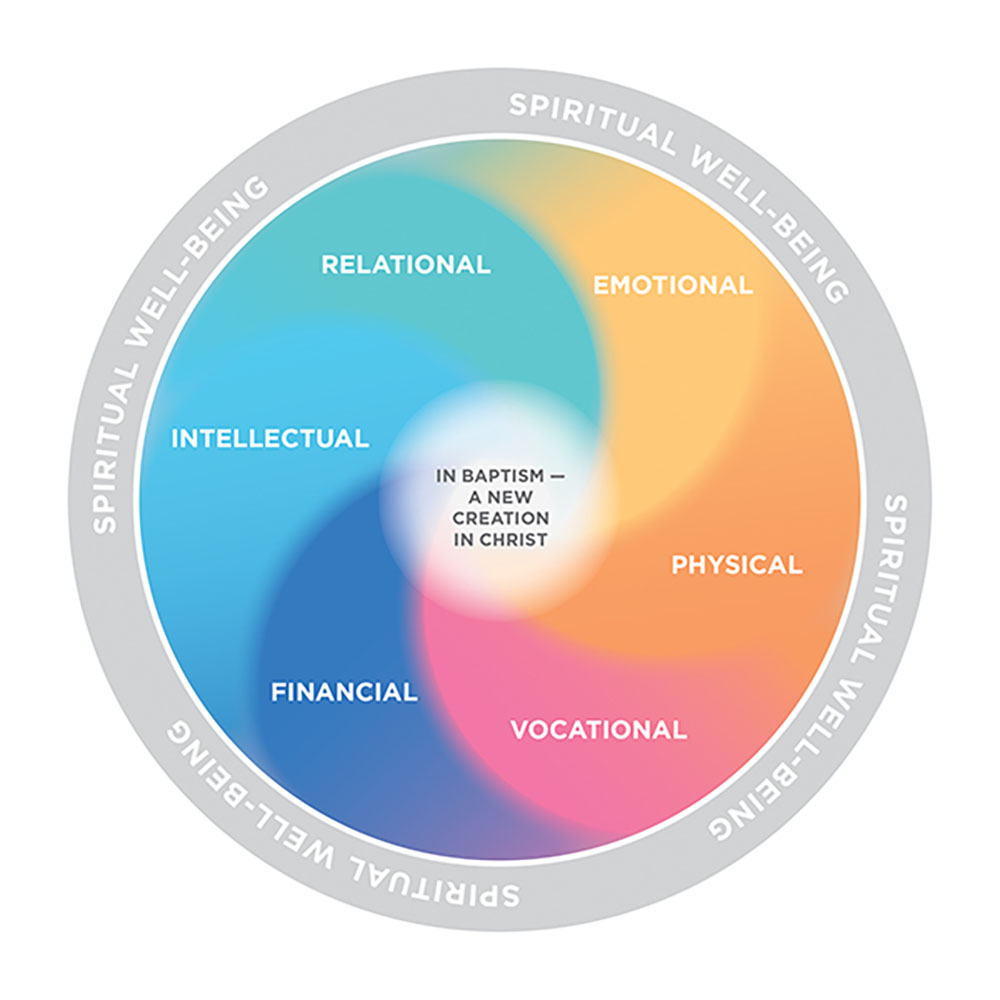
As Lutherans, we understand that the various aspects of our wellness — intellectual, emotional, relational, physical, financial and vocational — relate to and depend upon one another, and are all rooted in our Baptism, our true identity as new creations in Christ. We understand spiritual well-being not as a facet of our wellness, but as fundamental to any and all facets of wellness for a Christian.
The following reflection, written by Dr. John Eckrich, explores the theology of physical well-being.
“Or do you not know that your body is a temple of the Holy Spirit within you, whom you have from God? You are not your own, for you were bought with a price. So glorify God in your body” (1 Cor. 6:19–20).
God creates us — body, mind and spirit — to be stewards rather than owners of His creation. St. Paul reminds us of this special purpose and the importance of God’s human creation as a vessel to house the gift of His presence as the Holy Spirit — as well as the cost of that precious purchase, the death of His very Son.
From the fall (Gen. 3), we know of the disease, dysfunction and death brought on by the doubt and disobedience of our ancestors and ourselves. We know the cost of this distrust of our relationship with our Creator: “For the wages of sin is death, but the free gift of God is eternal life in Christ Jesus our Lord” (Rom. 6:23; see also Rom. 7:1–6).
What are the stewardship principles for bodily care that God reveals to us in His Word and as He continuously opens knowledge of creation to His children?
- MOVEMENT: All of God’s creation is in motion, from the stars and planets of the universe to the tiniest elements housed in each cell of our body. Even what appears inanimate has ions in slow, rhythmic motion. Movement is essential within the temple of the Spirit as well. Muscles, digestive juices, immune system and all components of our body function best when they are in motion, fed by oxygen and glucose or exercised and rested. We rejoice, no matter what stage of life we are in and no matter what our physical abilities or limitations, that God has graciously granted us the capacity of a variety of types of movement. We can establish patterns of regular movement to help optimize effective bodily function and, furthermore, as a unique opportunity to care for our neighbor.
- NUTRITION: God creates us and all creatures to thrive on His gifts of plants and animals. He gave us all fruits and vegetables with reproducing seeds for food in the Garden (Gen. 1:29–30). After the flood, in Genesis 9:1–5, God likewise gave us every moving thing that lives. God Himself uses these means to bless bodily life with longevity, quality of function and health. Scripture guides us to avoid gluttony of any kind and to respect and give thanks for both the source and consumption of our nutrition.
- REST: God designs His creation to thrive with periods of regular rest. He models that in the seven days of creation (Gen. 2:2). All of creation — humans, animals and nature itself — functions best with times of rest. Jesus often goes off alone or with His friends to set boundaries, pray, commune with His Father and have physical rest (Mark 4:35–40; Matt. 14). Bodily function, cognitive ability and hormonal function, as well as all parts of the body, serve us best with periods of recovery and rest. All of us will die, unless Jesus comes soon, and we will enter the great rest of heaven. When He returns, He will restore us, changed, and will heal all of a damaged creation to perfection. We believe in the resurrection of the body after that rest (Article III of the Apostles’ Creed).
- LIVING NON-ANXIOUSLY: We see the effects of stress, fear and worry on our minds (the innumerable anxiety disorders of our culture) and our spirits (Satan’s attacks on faith), but also clearly on our bodies with the physical sequelae of anxiety: heart disease, hypertension and stroke; digestive disorders; obesity and eating disorders; dementia and death itself, to mention but a few.
God speaks to us in His Word: “Therefore I tell you, do not be anxious about your life, what you will eat or what you will drink, nor about your body, what you will put on. … Look at the birds of the air: they neither sow nor reap not gather into barns, and yet your heavenly Father feeds them” (Matt. 6:25–26).
Look at the anxious and unhealthy state Adam and Eve find themselves in after their (and our) disobedience. And yet, the Creator leaves our first earthly parents (and us) with a promise and fulfills that covenant with His creation in His Son (John 3:16, Gen. 3:15). We are gifted by the Father and the Son with the Holy Spirit to work peace in troubled body, mind and spirit: “Likewise the Spirit helps us in our weakness. For we do not know what to pray for as we ought, but the Spirit himself intercedes for us with groanings too deep for words. And he who searches hearts knows what is the mind of the Spirit, because the Spirit intercedes for the saints according to the will of God. And we know that for those who love God all things work together for good, for those who are called according to his purpose” (Rom. 8:26–28).
Rather than bearing these destructive forces ourselves, we can place them in the arms of our Savior, “casting all your anxieties on him, because he cares for you” (1 Peter 5:7).
With these stewardship principles in mind, we thank the Creator that He has made us physical beings. We are aware that God also allows us to care for our bodies according to the capacity and limitations we experience in genetic infirmities, bodily disease, mental illnesses and the aging process in general. We thank Him for the redemption bound to Jesus’ physicality, His body and His blood brought to us in the Sacrament of the Altar. We praise Him for granting us the response-ability to pray, praise and thank Him as we say and sing to His glory through healthy lips, and as we serve Him and His people with physical limbs.
“As each has received a gift, use it to serve one another, as good stewards of God’s varied grace: whoever speaks, as one who speaks oracles of God; whoever serves, as one who serves by the strength that God supplies — in order that in everything God may be glorified” (1 Peter 4:10–11).
This theological reflection first appeared in the 2021 booklet “A Lutheran Perspective on Well-Being” (LCMS).
In the coming months, you will hear more about the work of LCMS Church Worker Wellness initiative, including new resources and more. Stay tuned to Reporter, The Lutheran Witness and the LCMS Church Worker Wellness site for updates.